
Is your content a mismatch with your audience? Why visibility often doesn’t lead to results
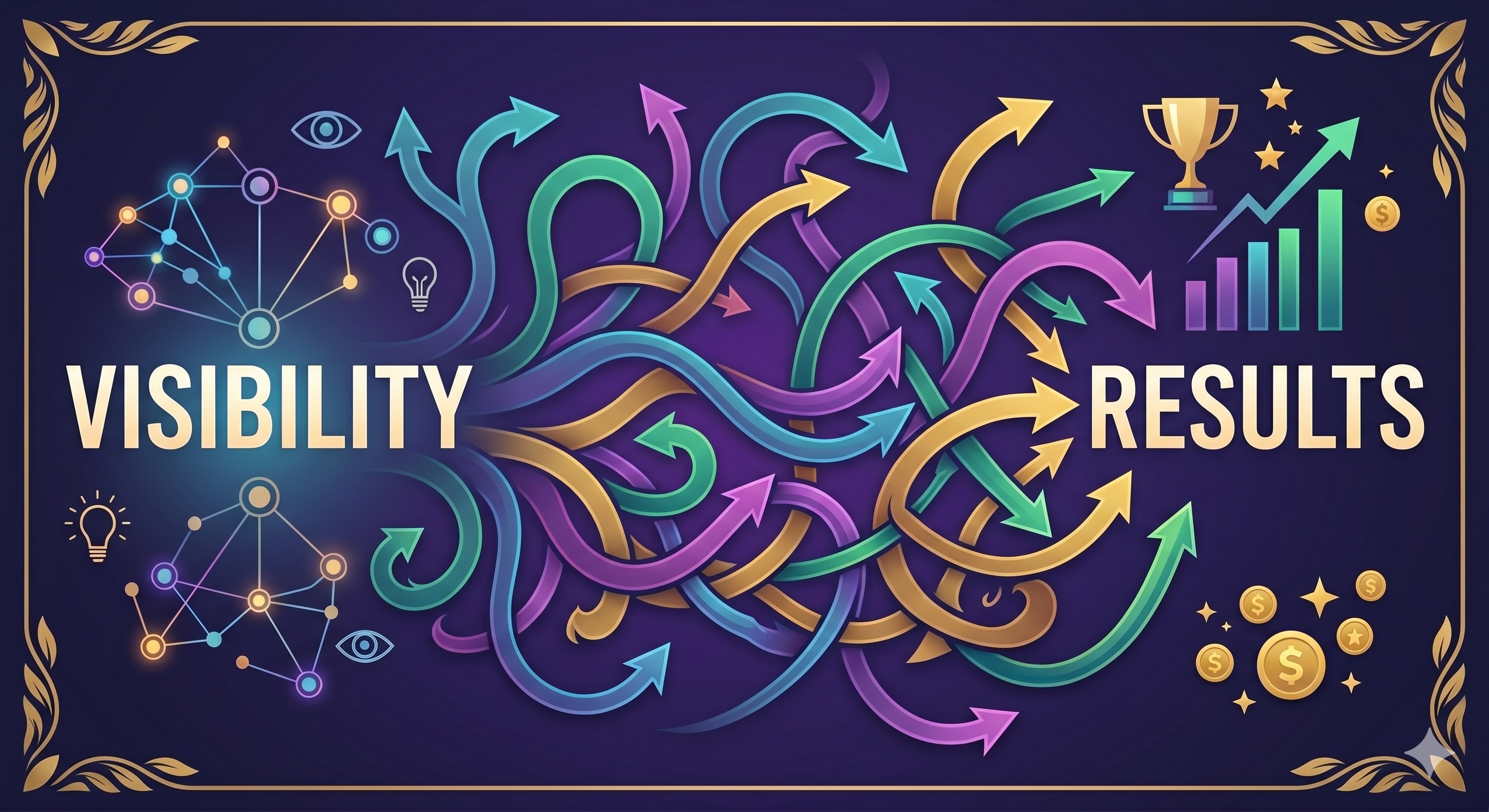
The digital audience journey has always been marked by an inflection point: The moment when a visitor winds up on a brand’s owned content and puts them in a position where they are hearing from that brand directly, in an environment that that brand controls.
Marketers’ holy grail of visibility used to be a high search ranking, because that inflection point happened with a click. With AI recommendations, the inflection point is far less direct or predictable – instead, it’s a crossroads, and the visitor may well wind up on the wrong path.
Today, simply being found isn’t enough. Recommendations aren’t results. Brands have to be relevant – and what relevance means to one visitor is completely different to what it means for the next. How can brands identify whether their content will help guide audiences in the right direction, or whether that crossroads will lead them to a dead end?
Understanding the new inflection point
In the SEO era, a visitor finding your brand high in a search ranking would typically lead to a click and a site visit. While SEO has always had plenty of opaque machinations, at least this part was straightforward. Visitors would wind up on your website because they were searching either for your brand directly, or for something that your brand can do for them. If their query was something broad and generic, they’d likely land on your homepage. If it was something very specific, they might land on an SEO-optimized page that was designed for people with that exact query (or a very similar one). In other words, from point A to point B.
Now, marketers often can’t fully see, let alone measure, what happens after they turn up in an AI overview or an LLM query. Sometimes they aren’t even properly credited – the “ghost citation” problem. This is because a direct click isn’t necessarily a curious user’s next step. In many cases, they’re making partial or even full decisions about a brand before they ever wind up on that brand’s website.
This results two very novel situations that create the aforementioned “crossroads”:
- A visitor may do extensive research on a brand before they end up on that brand’s intended “front door,” the homepage, by typing it into a browser directly or clicking through from a third-party source like a news article, social media profile, or product review site. They are arriving with extensive knowledge of the brand and very distinct questions about how it might suit them as a customer, but they’re arriving on a generic homepage that assumes they know nothing about it.
- A visitor may click through to a citation in an AI overview or an LLM query. This lands on the brand’s site directly, but it’s not necessarily the homepage. It may be a niche resource or tutorial page that was never intended for first-time visitors; it may be geared toward visitors who are on the cusp of conversion, or even those who are already customers. Typically, these visitors are at least in the consideration phase of the journey; they know enough about your brand to have a query that gets them such specific answers.
In other words, the initial visit to your site is no longer necessarily the beginning of a journey. It’s often somewhere in the middle – but visitors are landing on content that may assume they’re still at step one, or on the other hand, that assumes they’re already customers. This is exacerbated by the “Trojan Horse content” phenomenon, in which Knotch discovered that the vast majority of site visitors who used AI in their journeys did not click on a direct citation to get there. Brands need to undertake new strategies to ensure those visitors aren’t being steered in the wrong direction.
How to stop sending visitors down dead-end roads
To really understand content performance today, you have to connect three layers that have historically been measured separately.
- First, there’s how AI systems perceive and recommend your brand – your visibility, your share of voice, the way your content (and, crucially, content in which others talk about your brand) is interpreted and surfaced.
- Second, there’s what users actually do when they arrive. Not just whether they show up in the first place, but whether the experience on your site meets their expectations, builds their confidence in the reputation of your brand (or establishes it in the first place), and moves them forward.
- Third, there’s whether those interactions lead to real business outcomes.
Individually, each layer provides a partial view of your content’s effectiveness; together, they tell you whether it’s actually working. The inflection point of a visitor’s journey hinges upon all three.
Marketers today talk a lot about “the missing middle” – the audiences who are at a point where they know too much about a brand to be influenced by pure awareness marketing, but not enough to be pushed toward conversion in that moment. With AI, the “missing middle” is growing. But many of those same marketers have not optimized their brands’ website content to address this reality, which is why AI-influenced visitors are finding themselves pushed toward content that’s geared toward an audience that’s either further along or further behind them in the conversion funnel.
Two basic questions can help you realize if your content isn’t addressing that “missing middle”:
- What content is on your site that’s designed for existing customers, not prospective ones – or for those on the cusp of conversion? What happens if a new visitor who’s somewhere in the middle of the audience journey ends up on one of these pages?
- Does your homepage welcome visitors who have already done extensive research on your brand – and provide them adequate pathways to move forward? Or does it assume everyone who shows up at your “front door” is in the extremely early phases of their journey?
Once you’ve explored these two questions, you are on track to figuring out whether your content is directing these AI-influenced audiences toward content that’s either too far or not far enough in the audience journey. It’s a litmus test for determining your readiness for relevance. You’ll learn whether that inflection point is directing visitors toward dead ends. And that’s when you can begin working toward optimizing for it.
Over time, your brand’s content begins evolving alongside AI, not just reacting to it.
Published on April 24, 2026
Become a thought leader
Become a thought leader






Trusted by the largest (and now smartest) brands in the world.
“Before Knotch we did not understand what content was driving business results. Now we understand which content moves the needle. Knotch’s cohesive reporting and insights paint a real picture of what’s happening on our website instead of the patchwork quilt that comes from a Google Analytics approach. With Knotch we have been able to re-prioritize ad spend, route better leads to our SDR team, and inform our content development initiatives.”

"The Knotch platform ensures that we deliver high-performing content tailored to young home shoppers, enhancing their experience and driving better business outcomes.”

"Our partnership with Knotch has been highly successful, empowering us to leverage data-driven insights and refine our content strategy.”
