
Making your website a “trust engine”: How to build credibility in the AI era
A funny thing is happening on the internet right now. The more people turn to AI for answers, the more they’re turning back to brand websites in search of the real truth. They’re expecting a brand’s site to validate what an LLM already told them – and they expect that validation fast.
That was one of the biggest topics of conversation at Knotch’s recent NextGen CMO event in San Francisco, where brand leaders gathered to explore the future of websites and learn fresh insights from a conversation with Mohit Jolly, VP of marketing at Google. If you’ve spent the past decade optimizing your site for clicks, keywords, and conversions, this new era will feel very different. Those are still important, but there’s a new layer to consider now.
Yesterday’s websites were conversion engines. Today’s are what could be called “trust engines.”
From “branded content” to “trusted content”
For years, “branded content” was a term that carried some baggage – too polished, too self-serving, potentially inauthentic. But now, as generative AI floods the internet with undifferentiated copy, brand ownership is becoming a marker of authenticity. In fact, the conversation touched upon the likelihood that brand websites may start to be considered higher-trust, more premium assets than ever.
Consumers are realizing that AI tools can’t always tell fact from fiction. When they need to verify a claim, confirm a statistic, or check a product feature, they’re not asking ChatGPT to double-check ChatGPT. They’re going back to the source: your site.
The collapse of the funnel – and the AI speedrun
At Knotch, our data backs this up. Audiences arriving from LLM-driven referrals like AI Overviews, ChatGPT citations, or Copilot suggestions tend to convert faster. Their average time to conversion is three days instead of nine, and they visit fewer pages before taking action.
That doesn’t mean they’re being impulsive. Rather, someone who may have spent weeks or months languishing in brand awareness or consideration is finally spurred to take action. They may have seen your out-of-home ads, TV commercials, or sponsored posts on Instagram, but they weren’t aware that your brand could fit a highly specified need they had until an LLM told them.
And today, there are also nuances that we don’t fully understand: We don’t know whether an LLM genuinely “speedruns” the customer journey, or whether audiences that are likely to make quick decisions are more prone to turn to LLMs versus more traditional means of discovery. As consumer AI use continues to gain traction, these answers may become clearer.
But one thing’s for sure today. By the time users land on your domain, they’ve done their research elsewhere. Now, they’re asking:
- Does this brand legitimately do what I need it to do?
- Can I trust the information that I found on the LLM?
- Does the company practice what it preaches?
And if the answers aren’t immediately clear, they’ll bounce just as quickly as they arrived.
Trust is a design challenge
For marketers, this changes what “good UX” means. A beautiful homepage and quick load times are table stakes. The new differentiators are trust signals. These are the subtle cues that tell visitors they’ve arrived at an authoritative, reliable source.
Those cues go beyond the obvious security badges and privacy policies. They live in your tone, your transparency, and even your willingness to say no. As Jolly noted at our event, “If there’s something your product can’t do, make sure your site says so.”
Here’s an example. LLMs tend to give agreeable answers, and audiences have picked up on this – making it ever more important to them to verify what the LLM told them. A clear “no” on your actual website can be a competitive advantage. You may not be the brand they choose this time, but they’re mentally (and maybe even subconsciously) filing you away as a reputable option when the need arises in the future.
Some of the most future-ready brands are now treating trust as a design system, setting the groundwork for a full “trust engine” architecture:
- Visible sources and citations on pages.
- Up-to-date timestamps to show content freshness.
- Human authorship and bylines to reinforce credibility.
- Structured content that makes it easy for both users and AI agents to verify facts.
- Frequent reviews to ensure everything stays up to speed.
In days past, your credentials might have lived on your “About” page. But now that reputation needs to be upfront in every corner of your site.
Content governance builds credibility
Another theme that surfaced throughout the event: content cleanup is a crucial part of your strategy. You need to invest real time into pruning outdated pages, killing dead campaigns, and removing expired offers to prevent AI models from surfacing incorrect information.
For marketers, every neglected landing page or orphaned blog post is a potential liability. The emerging best practice is to treat content pruning like product lifecycle management:
- Regularly audit which pages still serve a purpose.
- Update or sunset assets that no longer reflect current offerings.
- Tag content versions and expiration dates so outdated pages don’t linger in LLM training data.
This discipline is what keeps your digital footprint consistent both for humans and for algorithms.
How to build a trust engine: A lens toward the website of the future
The consensus across Knotch’s San Francisco event was clear: websites aren’t going away. (This fall’s other NextGen CMO events in New York and Charlotte came to the same conclusion.) Instead, websites are evolving into verification hubs. Think of it as the connective tissue between AI discovery and human decision-making. They’re your brand’s final word in an era of infinite information.
Ready to meet your customers where they really are?
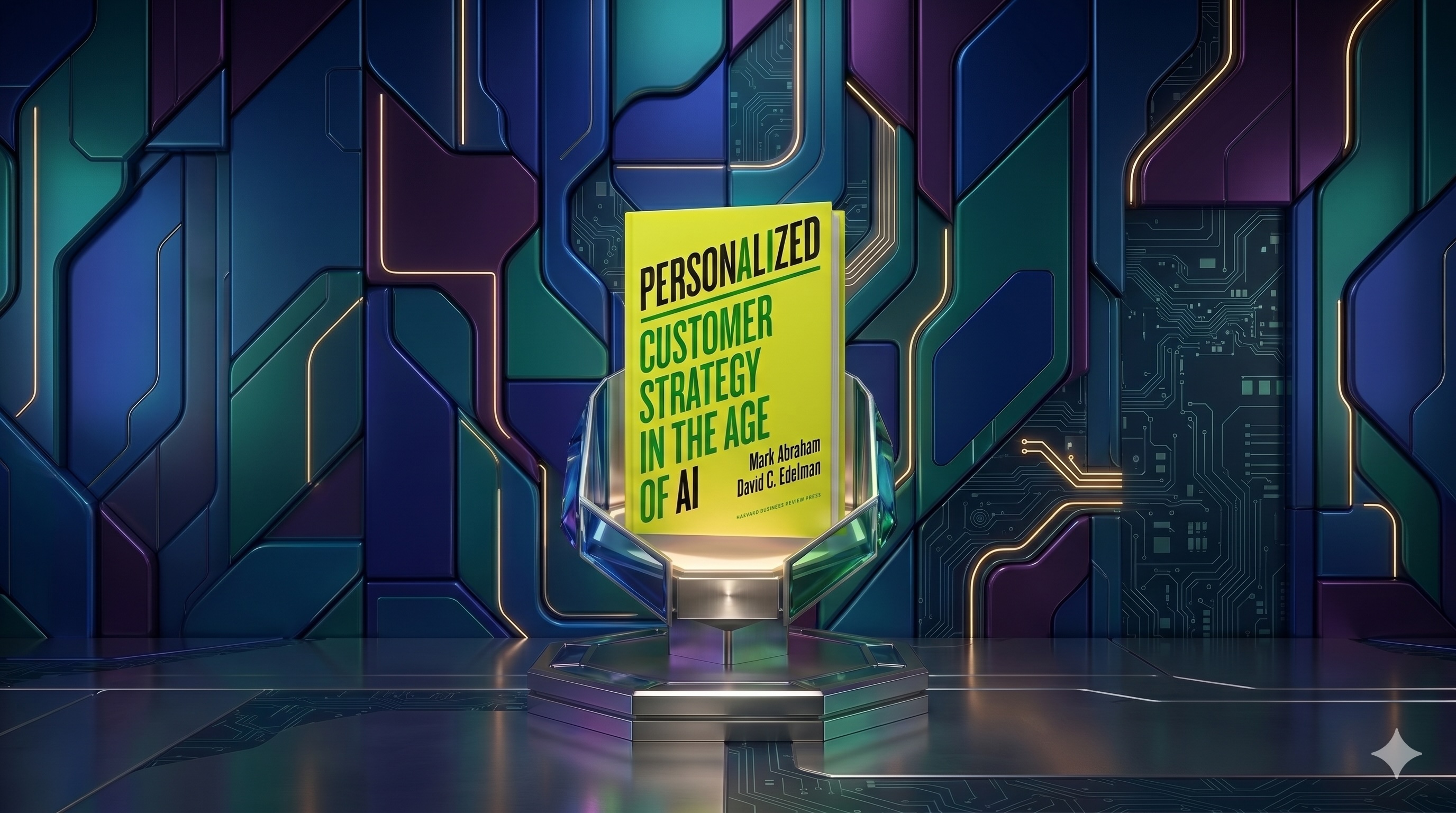
Download Knotch’s Customer Strategy Blueprint for the AI Era and learn how to optimize for humans and AI agents, accelerate intent, and build journeys that win in an LLM-shaped world.
The brands that win in this new landscape will be those that can prove their own reputability, not just assume it’s implied. If “content is king” defined the last decade of digital marketing, the next decade will be defined by something quieter but far more powerful: credibility is currency.
Published December 5, 2025
Become a thought leader
Become a thought leader






Trusted by the largest (and now smartest) brands in the world.
“Before Knotch we did not understand what content was driving business results. Now we understand which content moves the needle. Knotch’s cohesive reporting and insights paint a real picture of what’s happening on our website instead of the patchwork quilt that comes from a Google Analytics approach. With Knotch we have been able to re-prioritize ad spend, route better leads to our SDR team, and inform our content development initiatives.”

"The Knotch platform ensures that we deliver high-performing content tailored to young home shoppers, enhancing their experience and driving better business outcomes.”

"Our partnership with Knotch has been highly successful, empowering us to leverage data-driven insights and refine our content strategy.”
